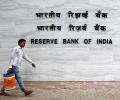
Given the pressure from India Inc and the banking fraternity, it is surmised that the portfolio rejig will take place before April.

Recently, Slice, a payment app, acquired a 5 per cent stake in North East Small Finance (NESF) for $3.42 million - the first such deal by a fintech in a small finance bank. Slice (valued at $1.5 billion, and backed by Tiger Global, Blume Ventures and Axis Bank) will technically get a toehold in a scheduled commercial bank if NESF were to get a licence to morph into one down the line Such a transition is well within the banking regulator's declared framework. The transaction has to be seen in a larger context.

NBFCs with a proven track record, supported by the brand values of reputed corporate, can play a key role in bringing the benefits of banking and economy to the underserved and newer segments of India.

The onus is on the banks to pass the benefit to customers.
This time the all-powerful interest-rate setting panel, whose constitution was notified by the government on Thursday, will take call on interest rate. But that's not the only change. The Reserve Bank of India has also decided to change the timing of announcement of its policy review, due next Tuesday, to mid-afternoon.

The meeting was amicable, a stark contrast to the meetings of earlier years that always ended with the rivals at loggerheads.

Highly-rated finance firms and housing finance companies are expected to benefit from the absence of Housing Development Finance Corp (HDFC) from the bond market once it merges with the HDFC Bank in early FY24. Post merger, the bond market is expected to become less crowded, which will ease fund raising conditions for other players in the field. It may perhaps also compress the spread for debt instruments floated by housing finance companies (HFCs) over 10-year government bonds, subject to demand and supply conditions.

The banking regulator was uncomfortable with the runaway pace at which consumer credit was growing.

Police FIR reveals the bank had replaced 44 loan accounts of HDIL with 21,049 fictitious loan accounts. These 21,049 were actually not created in the core banking solution of the bank, but were mere entities in the advances master indent submitted to RBI for conducting its inspection for the year ended March 2018.

The panel suggests the government be authorised to raise the thresholds, which trigger applicability of Corporate Social Responsibility provisions.

Khara will replace SBI Chairman Rajnish Kumar, whose three-year term comes to an end on October 7.

The Centre has advised banks to make a 20 per cent reduction in expenditure related to non-core business activities, along with deferring "avoidable expenditure" on "purchase of staff cars", "refurbishment of guest houses" and on the interior decoration of administrative and back offices.

According to a government reply in Lok Sabha, as on June 30, 2017, there were about 109,598 cases pending across debts recovery tribunals, with recovery dues of Rs 635,500 crore.

He cautioned however that these are the early signs and one should not start celebrating.
Mundra fills the vacancy created by the retirement of KC Chakrabarty in April, two months before his five-year tenure was come to an end.
Uttam Prakash Agarwal alleged that Citax and Braich offers were incomplete and did not include firm commitment as to the price, size, timings, confirmation from the banks about availability of the funds.

The yield on the 10-year bond may fall to 8.70 per cent due to FII flows in debt.

Many bankers say the move will have a serious impact on the chain of command of nationalised banks and that it would only enable the government to dish out favours to a few of their own men.

Between April and August, it issued request seeking LoC against 147 individuals to prevent them from leaving the country, the bank said in response to a Right to Information query filed by Pune-based activist Vihar Durve.
The Reserve Bank of India (RBI) unions have decided to intensify their stir demanding revision of wages, pending since November 2017, and have called for mass casual leave of employees at the central bank on November 30. However, several sources in the RBI told Business Standard that the unions may not have to go on agitation, as the new contours of the wage pact have been almost finalised and could be announced any time. An email sent to the RBI was not answered. The United Forum of Reserve Bank Officers and Employees had deferred its agitation earlier after it was told that RBI Governor Shaktikanta Das was to hold talks with the human resource management department (HRMD).

The RBI has cited corporate governance and regulatory issues for not extending Kapoor's term. Further, the lender has been directed to search for a successor.


Banks seems to be upset over RBI's move over rate cut.

A corporate lawyer said that this is the biggest failure of corporate governance in this country. He pointed out that American investors can even take the bank to court for giving false statements to stock exchanges and even file class action suits. Some even questioned how RBI overlooked Kochhar's misdeed.

In August, the Reserve Bank of India Governor Shaktikanta Das held a meeting with chief executive officers/ managing directors (CEOs/ MDs) of large non-banking financial corporations (NBFCs). The discussions included diversifying borrowing sources for NBFCs and housing finance companies (HFCs) to contain increasing reliance on bank borrowing, risks associated with high credit growth in retail segment in unsecured loans, prioritising IT upgrades and cyber-security, improving provisioning, monitoring of stressed exposures and slippages, ensuring robust liquidity and asset-liability management, ensuring transparency in pricing, creating robust grievance redress mechanisms.

Many from this small lender have made it to other bank boards over the past 5 years

Indian companies are expecting generous tax incentives from the Union Budget that will help them invest more in building capacities in the coming years. While the productivity-linked incentives (PLIs) are a good start to spur local manufacturing, the government should also take steps to boost consumer demand, which is not showing encouraging signs, say chief executive officers (CEOs) of India Inc. Statistics released by the Reserve Bank of India (RBI) shows that Indian banks had sanctioned loans worth Rs 75,558 crore in 220 new projects - a record low - in the pandemic-hit financial year ending March 2021. This is not showing any signs of a significant pick up in the last nine months of the ongoing financial year.

Unlike any other business, banking is a turf where the captain's role is the most critical. Often a bank is defined by the personality of the CEO who runs it. Both HDFC Bank and Kotak Mahindra Bank are the creation of their CEOs, notes Tamal Bandyopadhyay.

After the success of the National Highways Authority of India's (NHAI's) first infrastructure investment trust (InvIT) with foreign institutional investors, the Centre is working on a proposal to launch a fresh InvIT for national highways, where domestic retail investors can hold units of the trust

'For the first time ever it has come below 1 per cent, at 0.97 per cent.'

The incidence of corruption cases can be checked to a large extent if the suggestions already available with RBI and the government are taken seriously, says Shyamal Majumdar.

Slow credit off-take to put pressure on margins

In a letter addressed to Gogia's mother, Madhu Kapur, who holds a 12 per cent stake in YES Bank, the private lender said its board of directors, after extensive deliberations, had unanimously agreed not to accept her recommendation to appoint her daughter on the board.

What connects P S Jayakumar of Bank of Baroda, V Vaidyanathan of Capital First Ltd and Chandra Shekhar Ghosh of Bandhan?

For the fortnight ended September 5, annual credit growth in the banking system fell to 9.68 per cent, data released by the Reserve Bank of India showed.

RRBs were formed under an Act to provide credit to small farmers, agricultural labourers and businesses in rural areas.

The value of transactions through debit and credit cards used at the PoS fell to Rs 64,200 cr in February

The Reserve Bank of India (RBI) on Wednesday proposed to make interoperability mandatory for digital payments firms. It also allowed users to withdraw cash from e-wallets and fintech companies to process RTGS and NEFT transactions. The RBI expressed dissatisfaction over prepaid payment instruments' (PPIs') failure to migrate towards full-KYC (know your customer) PPIs, and therefore interoperability, even two years after guidelines were issued.
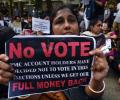
Only when the RBI inspection started on September 19 did they realise that their game was up and one of them had sent a letter to the central bank, leading to the RBI crackdown, report Anup Roy and Subrata Panda.
